Open Heaven
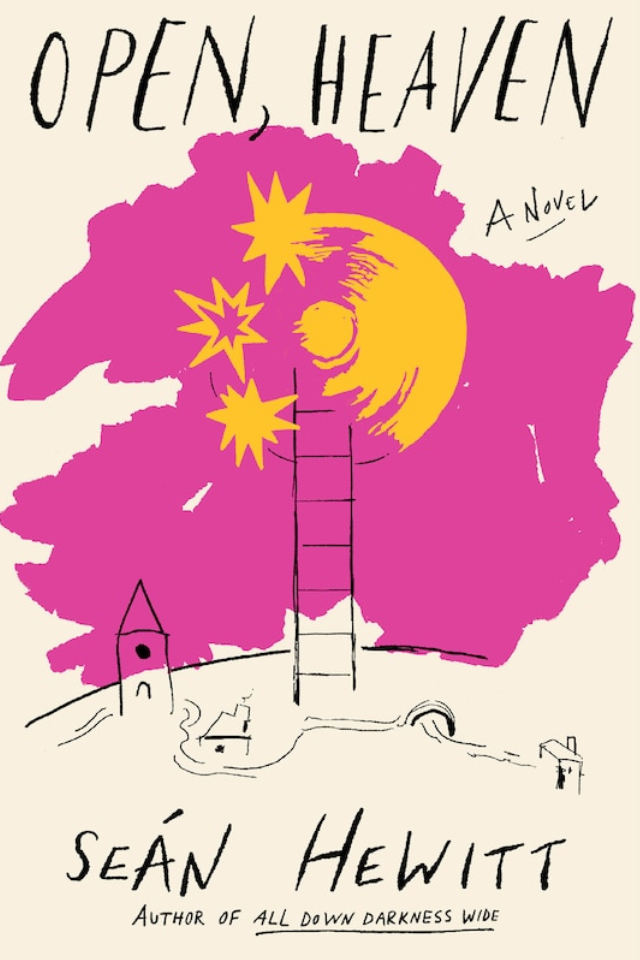
Set in a remote village in the North of England over the course of a year, this novel follows the newly consuming desires of sixteen year old James. James is a shy observer of his community, in particular the emotions that separate him from the rough-and-tumble boys at school as well as the adult’s hissed arguments behind closed doors. He is also an acute observer of his own feelings, and we feel every clench of his heart, side-eye of his parents, and brush against a schoolmate’s leg.
Then James meets Luke, a handsome, chaotic rebel who he immediately gravitates to. Luke becomes a catalyst for James to consider venturing out of the confines of village life, fueled by James’ desire - aching, burning, all-consuming - for the touch of another boy and the worldliness that boy brings.
Quote
Sometimes I found the mere presence of the boys hard to bear, as though they were so beautiful I couldn’t look at them. Even Adam – an average boy whose clothes smelled of damp – had been a fixation for me once. It was his scruffy unselfconsciousness, his easy smile, the way he swung his arms around his friends when he saw them. I was desperate to be set free from my longing, and the only way I could be set free was if one of the boys opened me up.
Sometimes when I saw them, my whole body would fill with a heavy anxiety, a dread that only beauty could bring out, because I was afraid of them and I was drawn to them with an instinctive, overwhelming need. It was all I could do, some hours, not to rush out of the classroom, to run away, and now there was Luke, his presence taunting me even when he was not there.
As James draws closer to Luke, who begins to share his own deep wounds surrounding his father and desire for stability, James feels guilt at pulling away from his mother’s attempts at understanding his sexuality and his father’s gruff insistence that James do more to care for his epileptic five-year-old brother.
Reading this book on the bus, there were several sentences where my breath was snatched from my lungs - I was shocked at how precisely Hewitt dove into an adolescent’s past to pick out their burgeoning sexual obsessions and shame.
This is not a book about coming out to others, it’s a book about the beginning of the process of coming out to yourself. This is a book is about what happens when burgeoning realizations of your agency, desire, and longing for expression push against the walls of a small town and family pressures.
The Folding Star
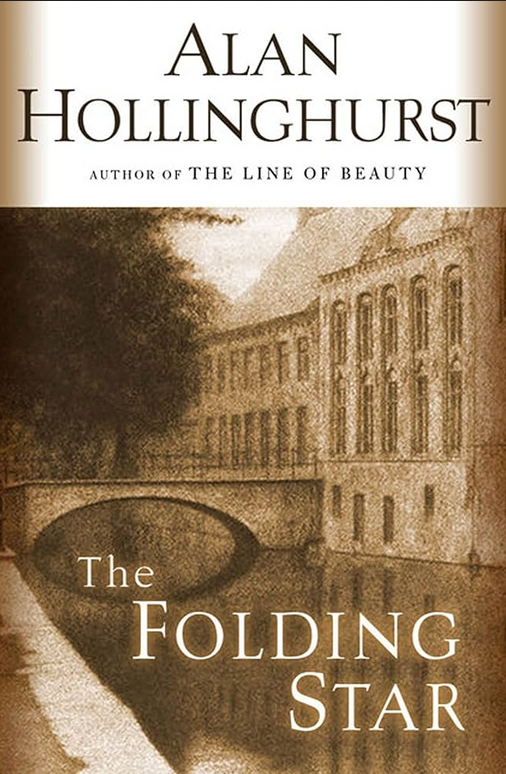
If you asked me to recall the plot of this book, I couldn’t tell you - this book’s purpose is to explore the depths of desire, the imagination, and boiling kettle of passion.
Put another way, this book is one long goon sesh.
Edward Manners, a mid-twenties British man, moves to a small Flemish town to tutor English and falls in love with one of his two students, Luc, a seventeen-year-old boy who has just been expelled from school. Even before he arrives, he’s convinced that he’s in love with Luc based solely on a photograph, and that feeling only builds on arrival as he begins some light stalking. His other student’s father is the curator of a small museum dedicated to painter Edgard Orst, who channeled his life full of passion for actresses into his works and whose life themes set the hedonistic undertones of Edward’s actions.
Edward frequents the local gay bar in an attempt to sate his hunger for Luc, but only manages to build his infatuation. CannonballRead’s review of The Folding Star notes that Edward is an overly-confident main character who isn’t nearly as smart or interesting as he thinks he is. While he never quite puts everything together himself, Hollinghurst still finds a way to get everything through to the reader.
After reading Open Heaven, the parallels between the two small European towns were clear. The enclosed atmosphere heightens the actions of the characters and gives their movements dream-like significance. Both love interests are seventeen, named Luke/Luc, and are rebels, troublemakers, those intended to be brought to heel but instead infect the boys close to them with mad lust. One imagines James - who never got over his love for Luke - as Edward, who - ten years after the events of Open Heaven - meets a young boy that unwittingly pours gasoline on the simmering goals of James’ infatuations.
An interesting anecdote from the novel’s Goodreads page: The Folding Star was a finalist and, according to many critics, a “moral winner” of the Booker Prize, which was ultimately not awarded for the explicitness of some scenes that apparently scandalized the jury. (Hollinghurst later snatched the Booker with The Sparsholt Affair in 2017).
For those who enjoyed the movie “Call Me By Your Name” (I haven’t read the book, so can’t comment on that), The Folding Star is a logical next step.
Didn’t Nobody Give a Shit What Happened to Carlotta
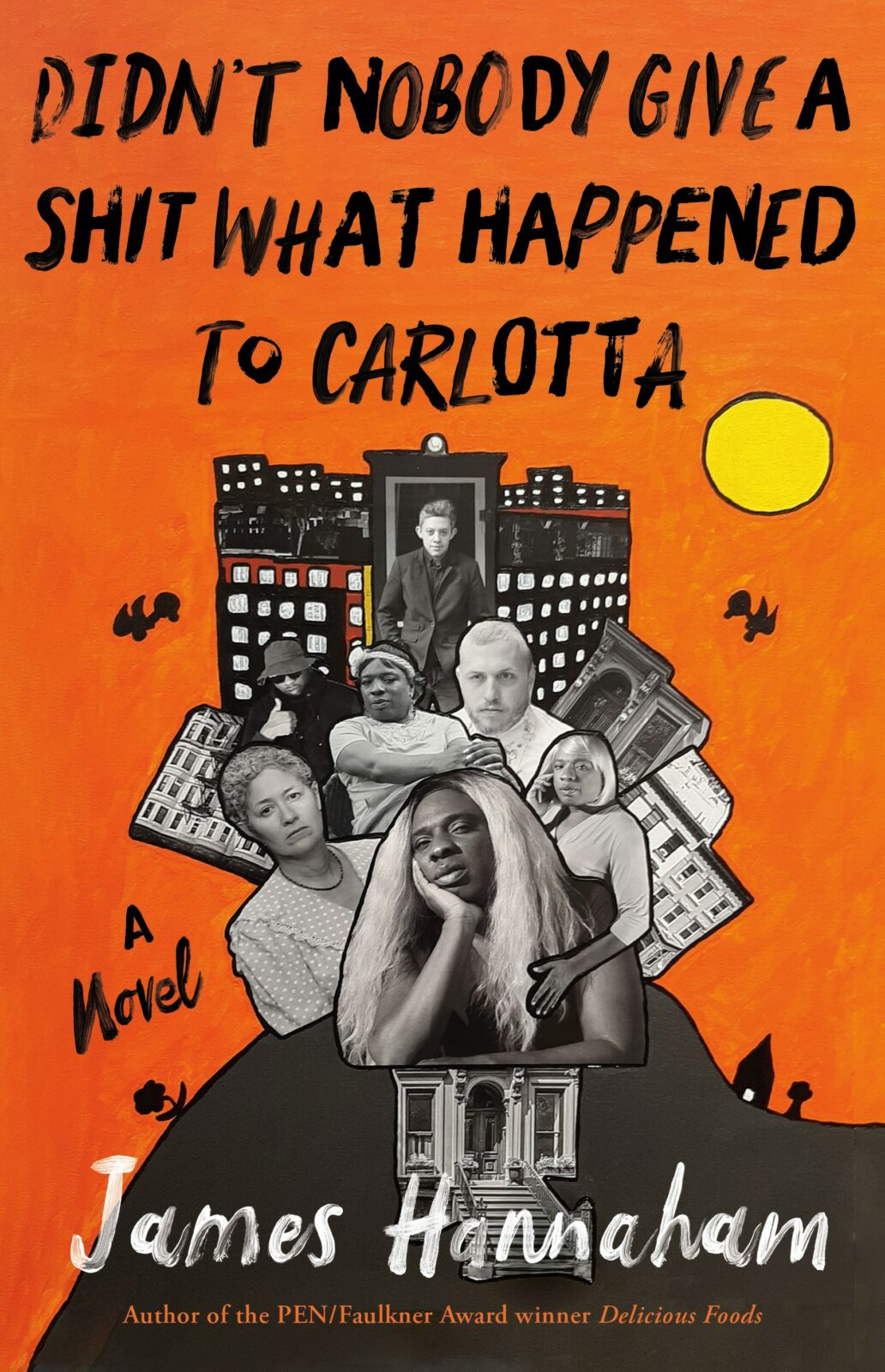
This was the first book I read with a transgender main character. This was also the first book I read in a long time that had me snorting and guffawing with surprised belly-laughter every few pages.
Carlotta Mercedes - a black trans woman - has spent the last 20 years of her life in a men’s prison for a crime she committed when she was 16, and wasn’t a she. After her fifth appearance at the parole board, she is released on the Fourth of July, where we follow her over the course of a hot, sweltering weekend in a gentrified Brooklyn neighborhood as she tries to meet the conditions of her parole while having increasingly ridiculous obstacles thrust upon her.
From the Guardian’s review:
Obstacles pile up at every turn. Her beloved son Ibe, with whom she lost contact in prison, has become an evangelical rapper who considers her gender identity the work of the devil. Her grandmother’s house is being used for a raucous, boozy wake, meaning she should stay well clear if she is to avoid being summarily returned to jail.
For every hard-hitting theme this book deals with - prison rape, racial profiling and youth violence, suicide, transness in the black community, reconnecting with a child now grown into a young man - Carlotta takes it all in stride as she struts down the catwalk of her newfound freedom in a single shoplifted designer shoe. At no point does she not have complete control over her look-life-in-the-face-and-tell-it-to-put-on-more-blush attitude.
Quote
“I just wanna be me, I just wanna be a human fuckin person like ev’-body else, without nobody telling me not to do who I am, holding me against my will, don’t wanna be no statistic or no tragedy or no symbol of nothing going wrong in society. Cause I’m what’s right, honey, I’m what’s going right.”
Disappoint Me
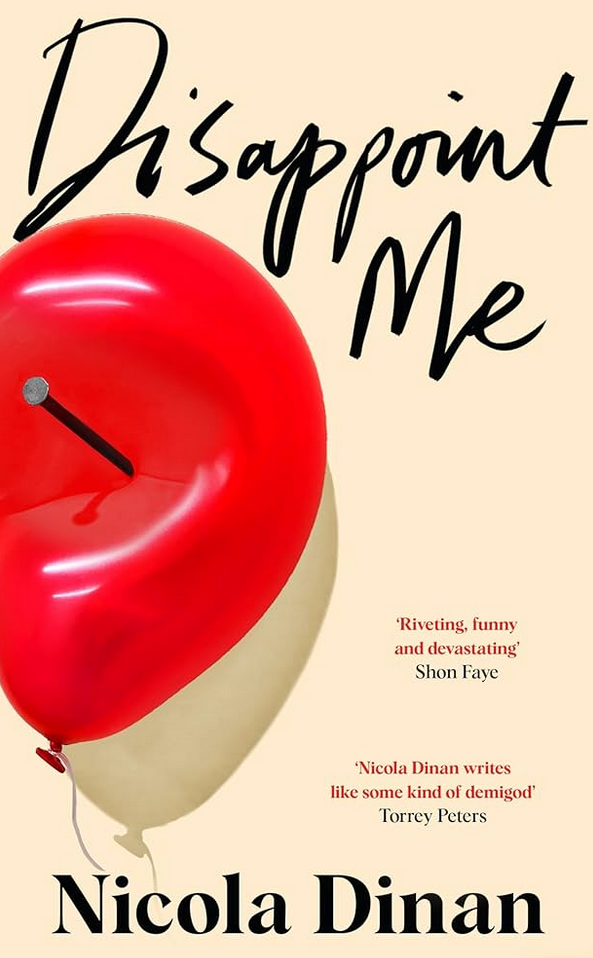
Disappoint Me is in many ways the opposite of Carlotta. If the latter is a high-camp romp through the ridiculousness of a city and family from the perspective of a woman flush with long-fought-for freedom, then the former examines a seemingly normal every-day trans life under a scanning electron microscope, zooming in on microaggressions, questioning the everyday routine of an established career, and calling back to trauma of years long past.
Paraphrasing the Goodreads summary, we meet Max, a thirty-year-old British-Asian trans woman who is a published poet and overpaid and bored legal counsel for a tech company. After a mishap at a new years eve party, she begins to examine her limbo-like life, neither decidedly heteronormative nor angry-and-queer. We follow her over the course of a year as she meets Vincent, a corporate lawyer with a white friend group and traditional Chinese parents who cares deeply for Max in a way that slowly allows her to let down her guard. This is a good thing, she tells herself. This can work.
Part way through the book, we begin getting chapters told from Vincent’s point of view, switching between the present and the beginning of his gap year in Thailand a decade prior, as he courts the attention of Alex, a gorgeous and adventurous traveler with secrets of her own.
Nicola Dinan dissects - with the steadiest of hands - the simmering early-thirties unrest of a borderline-passing trans woman in a heteronormative city. Max’s wit is lip-curling, acerbic, and will make you inhale sharply and hold that breath with pursed lips until the end of a particular paragraph.
Quote
‘I’ve had a really good evening,’ he says. ‘Me too.’ He gives me the look. That weird, dumb glare that men give you before they kiss you, a moment of vacancy before leaning in, a twisting of the head as if it were a star-shaped block to push into a baby’s shape sorter. He kisses me.
Dancer from the Dance
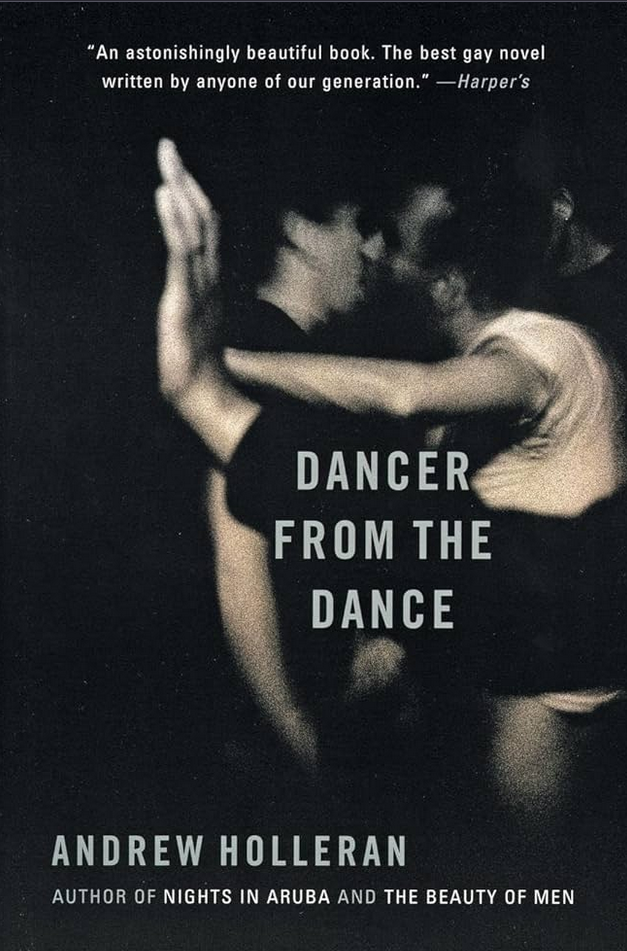
I encountered this novel towards the end of a snowy winter, four months before I’d live my most impactful summer. From May to August, I would bike - rather, fly - through the streets of Vancouver to a new job, make out with a boy after a drag show, dance with my shirt off at my first rave, and climb the side of a mountain.
Each of those moments was influenced by this book.
Over the course of one year, we experience the excesses and drama that only gay men in ’70s (pre-AIDS) New York knew how to embody. Dancer chronicles the restless momentum the characters feel as they’re pulled to the next lover, the next morsel of gossip, the next weekend party where clubbers are desperate for “their next look from a handsome stranger. Their next rush from a popper. The next song that turned their bones to jelly,”. This was the culture of ecstasy that would spawn the Paradise Garage a few years later.
The novel is told through the eyes of writer Paul, a participant-slash-observer in the scene, who encounters Sutherland and Malone. Malone, the protagonist of Paul’s novel-within-the-novel, is all earnestness; his quest for an authentic life, and above all for love, provides the book with most of what it offers in the way of plot.
The second section of the novel recounts Malone’s conservative upbringing and the beginnings of a dutiful and uninspired professional life, until a crisis of homosexuality that changes his life’s course. Malone quits his office job and moves in with masculine lover Frankie (who has left his wife and children for Malone). Of course, their honeymoon-like bliss does not last, and the novel picks up the thread of Malone’s story in the present. “The house of Guiche shall never refuse the protection of its manor to the poorest of its subjects,” Sutherland responds when Malone - a homeless stranger, beaten by his lover -approaches him for help. The declaration, with its affectation of royalty and mock-epic tone, is a statement of the extraordinary, unglamorous generosity and mock-philosophical musings that ageing queen Sutherland projects at each turn in the book, and that many times made me laugh out loud on the bus.
Quote
I am in fact so depressed that last night while Bob Cjaneovic was sitting on my face, I began to think how futile life is, no matter what you do—it all ends in Death, we are given such a short time, and everything truly is, as Ecclesiastes says, Vanity, Vanity, Vanity. (Of course that only made me burrow deeper, but still—to have the thought.)
Gay life for Malone is a complete revelation, the replacement of one set of values with another. He becomes not merely a devotee of the world of Dancer but its presiding spirit, “the figure on which everything rested. The central beautiful symbol.” Malone becomes the center of attention on the New York scene under the guidance of Sutherland and gradually melds to his new surroundings, first as voyeur and then shy participant and then enthusiastic addict, and finally as something approaching a divine martyr. Paul follows Malone as his quest for love leads him into the depths of the Lower East Side, and finally to an uncertain fate after a Gatsbyesque party on Fire Island.
The novel’s prose builds in waves, pulsing with the closed-eye trance of a dancer at a song’s approaching climax. Holleran’s passages suck you into the singular, frenzied focus of the queers on the page, who exhibit the same high camp and serious emphasis as a gospel preacher.
Quote
What queens we were! With piercing shrieks we met each other on the sidewalk, the piercing shriek that sometimes, walking down a perfectly deserted block of lower Broadway, rose from my throat to the sky because I had just seen one of God’s angels, some languorous, soft-eyed face lounging in a doorway, or when I was on my way to dance, so happy and alive you could only scream. I was a queen (“Life in a palace changes one,” said another), my soul cries out to Thee.
This novel recounts a moment in time that shaped the lives of every gay man for the next 50 years. Consider this your required.
City of Night
Where Dancer focuses on the high-camp hedonism of ’70s New York, City of Night winds the clock back 10 years to the same scene in the early ’60s. Rechy probes the urban underworld of male prostitution as we follow one “Youngman” from El Paso to Times Square, then from Los Angeles to the French Quarter of New Orleans. The male hustlers, drag queens, and johns in this book move through the outskirts of a society not ready to accept them as they deal with the confusion of identify, sexuality, and gender.
Though Rechy - whose experiences the novel is based on - gives the impression he was writing in a slangy, stream-of-consciousness fervor, the novel was carefully reworked over seven drafts, and hit the New York Times bestseller list before it was published in 1963. Whether writing about a street corner, seedy hotel room, or lurid bar, the focus is on the delicate emotions exposed in such places, where encounters are transformed into something tender and fragile. Our Youngman strikes up a friendship with another young, hip hustler named Pete, and though they share a bed one night, their romantic feelings are uncertain and inarticulable. They are lonely and want to be accepted for who they truly are while simultaneously constructing disguises and masks.
Quote
Like the rest of us on that street — who played the male role with other men — Pete was touchy about one subject: his masculinity. In Bickford’s one afternoon, a goodlooking masculine youngman walked in, looked at us, walked out again hurriedly. “That cat’s queer,” Pete says, glaring at him. “I used to see him and I thought he was hustling, and one day he tried to put the make on me in the flix. It bugged me, him thinking I was queer or something. I told him to fuck off, I wasnt gonna make it for free.” He was moodily silent for a long while, and then he said almost belligerently: “Whatever a guy does with other guys, if he does it for money, that dont make him queer. Youre still straight. It’s when you start doing it for free, with other young guys, that you start growing wings.”…
As the novel unfolds, the Youngman’s tone shifts from tragic to comic. He starts to straddle both the forced masculinity of the hustler scene as well as the bitchy, shameless world of gay bars, where he can sense the joy in sexuality, but closes himself away from it. He stands on one side of a line between his hustler shame and the Other (happier) Side of queerness, and, only beginning to understand himself, hasn’t yet figured out that there really is no boundary separating the two communities.
Crystal Boys
Published in 1983, this novel is widely regarded as the first queer novel in Taiwanese literature. Set in Taipei in the 1960s, it follows a similar beginning as City of Night. A-Qing, a teenage boy, is cast of out of his house after his father learns his son is gay, and makes his way to the gay hangout of New Park.
A-Qing finds community and role as an older brother in this community of young boys, lead by Chief Yang, as they form close bonds and take care of each other in the gaps left by dead or cut-off families. Throughout the novel, we learn about the stories of the boys who have found their way to New Park, such as Little Jade, who longs to find his lost father from Japan while entertaining rich scores who have become enamored by his beauty. Protective older men also move through the young boy’s world, like photographer Sheng-Gong who has watched over the “birds of youth” for years.
The second part of the novel is centered around the Cozy Nest, a gay bar run by Chief Yang, where the boys and other homosexual exiles have found refuge and is constantly in danger of being shut down by the police. The bar is sponsored by Papa Fu, whose young soldier son had shot himself when his homosexuality was exposed.
A powerful story from older members of New Park is that of Dragon Prince and Phoenix Boy, a legendary couple who are both crazily in love with each other. Dragon Prince tries to offer a home to wild drifter Phoenix Boy, who is can’t stand settling down. Dragon Prince goes mad and a dramatic tragedy the likes of which could only happen in gay communities takes place, leading to Dragon Price running to New York.
Quote
The heat of the park wasn’t so oppressive now that it was midnight, and the camphor trees were giving off a refreshing pungent fragrance. It was the seventeenth, and the dying glimmer of the moon, perched on the tip of the tallest palm tree like a chunk of charcoal about to turn to cinders, was murkier than it had been on the fifteenth. The place was as still as death, except for there on the steps of the lotus pond, where solitary muffled footsteps, anxious and urgent, grew softer and softer, then suddenly turned and headed back, louder and louder, faster and faster. His tall figure moved through the night, back and forth. Bony, towering, he paced from one end of the pond to the other without stopping; he hesitated as his eyes met mine, and finally stopped. He rested his spindly hands on my shoulders and stared at me with eyes that looked like wildfires raging in a primeval forest.
In one chapter, Dragon Prince describes his descent into desperate, lost years of cruising in New York, and one imagines him in a Turkish bathhouse locking eyes with Malone from Dancer during the years “the entire realm of daytime existence became meaningless to [him]”, or having his wallet stolen by the Youngman from City of Night.
Through the bonds of a community like the Youngman in City of Night touched, but never allowed himself to become a part of, A-Qing and his family in New Park acknowledge their loneliness and begin to build their self-identify within their world of queer men.